
Behind the scenes of contemporary Brazilian theatrical set design.
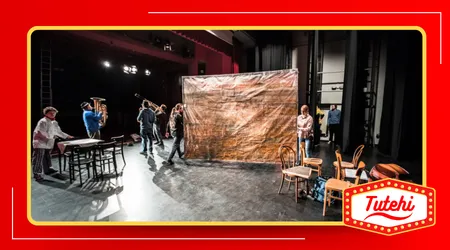
THE Brazilian theatrical scenography It represents the backbone of any show, transforming the creative sketches of set designers into tangible and safe physical realities.
Advertisement
Behind the scenes of the theater, anonymous professionals perform true structural miracles so that the magic of fiction can unfold before the attentive spectator.
The sector has undergone profound transformations, combining traditional artisanal knowledge with engineering innovations that raise the standard of national production.
Understanding the landscape of this profession requires looking beyond the heavy curtains and investigating the work dynamics in the assembly sheds.
This article presents a detailed overview of how the market operates, which technologies are driving transformations, and how sustainability impacts the cultural ecosystem.
Advertisement
We analyzed the daily challenges faced by stage workers in a market that demands dynamism and constant mathematical precision.
To facilitate your reading and navigation through this complex technical universe, we have prepared a structured guide with the main thematic areas discussed in the sector.
Explore the topics below and discover the secrets behind the greatest theatrical productions currently playing in the country:
Summary
- What defines contemporary Brazilian theatrical scenography?
- How have new technologies transformed stage productions?
- Who are the professionals leading the execution of the scenarios?
- What are the main structural and security challenges?
- How is sustainability applied behind the scenes today?
- FAQ (Frequently Asked Questions)
What defines contemporary Brazilian theatrical scenography?
There's something fascinating about the way the Brazilian theatrical scenography Today it balances the rustic heritage of classic carpentry with the rigor of large-scale musical performances.
Far from being a mere mechanical execution of drawings, the activity translates abstract poetic concepts into raw structures, prepared for the daily physical impact of entire casts.
Scenic engineering sheds function as living laboratories where physics and architecture bend to pure visual illusion.
The strengthening of production hubs in São Paulo, Rio de Janeiro, and Curitiba ended up consolidating a network of highly specialized suppliers.
Huge national festivals now require modular structures that can be assembled and disassembled quickly, leaving no room for loss of finish or wear and tear.
This desperate need for dynamism pushed the sector toward international standards, definitively changing the face of production.
The expansion of the corporate and mega-event market has also injected new life into workshops, bringing unprecedented materials and cash flows that were previously nonexistent.
It's interesting to note how the same professional moves between experimental, nearly low-budget pieces and multi-million dollar Broadway productions that are adapted for the screen.
This almost chameleon-like versatility ensures that national stages remain sophisticated, diverse, and constantly challenging aesthetics.
How have new technologies transformed stage productions?
The introduction of three-dimensional modeling software and mechanical automation disrupted the peaceful rhythm of the old scenic construction workshops.
Computerized cutting systems virtually eliminate raw material waste and deliver surgical-precise fittings in scenarios with complex organic geometries.
The millimeter precision of these machines has eliminated the need for improvised adjustments that used to consume entire nights during exhausting technical rehearsals.
Hydraulic lifting platforms and fast-moving rotating stages now respond to digital commands integrated into the lighting and sound effects consoles.
Who operates with the Brazilian theatrical scenography You need to master touchscreens with the same ease with which you handle heavy tools.
This hybridization of the trade values the worker who pursues training in electromechanics, changing the profile of the old factory worker.
Projection mapping and high-definition LED panels have profoundly transformed the relationship between the physical and virtual worlds.
Instead of emptying the tactile elements of the stage, the technology demands hybrid structures custom-designed to interact with beams of light.
Translucent screens manipulate the opacity of the scene, creating illusory depths that challenge the architectural limitations of traditional theaters.
Who are the professionals leading the execution of the scenarios?
The backstage ecosystem brings together carpenters, metalworkers, prop makers, mechanical engineers, and electricians under the watchful eye of the master set designer.
This manager acts as the ultimate bridge between the aesthetic delirium of the set designer and the implacable laws of gravity.
Understanding the behavioral limits of each material and the applicable regulations defines the threshold between success and technical disaster.
Historically, the transmission of this knowledge occurred in an almost mystical way, through battery-powered radios and the attentive gaze exchanged between generations in workshops.
Fortunately, technical education institutions have formalized this market by shaping qualifications focused on the specific needs of live performance.
Reference spaces such as SP School of Theatre They play a crucial role in the professionalization of this productive ecosystem.
The presence of women in leadership positions within heavy assembly teams has also grown noticeably in the country's major productions.
Today, women operate complex stage machinery, coordinate international transport logistics, and take on technical responsibilities for major national festivals.
This movement deconstructs old gender stereotypes and revitalizes labor relations, introducing new dynamics in workshops.
What are the main structural and security challenges?
Protecting the lives of the cast and crew is the red line that no one dares to cross in stagecraft.
Aerial structures require certified steel cables, double contingency bracing, and rigorous calculations of the load supported by the rigging structure.
Neglecting these engineering specifications often comes at a very high price, ruining reputations and putting lives at real risk.
Compliance with national regulatory standards has become a relentless enforcement process within public and private theaters. Rigorous inspections assess fire prevention systems in settings that rely on combustible materials or pyrotechnic effects.
The market focused on Brazilian theatrical scenography It requires the issuance of Technical Responsibility Notes by qualified engineers before any commercial launch.
+ The work of theatrical stage management between acts and scenes.
| Operational Stage | Key Professionals | Required Standards and Certifications | Predominant Materials |
| Construction and Carpentry | Carpenters, Metalworkers | NR-12 (Machinery), NR-06 (PPE) | MDF, Aluminum, Iron, EPS |
| Warp Assembly | Machinists, Riggers | NR-35 (Work at Height) | Steel cables, trusses, shackles |
| Effects Operation | Automation Operators | NR-10 (Electrical Safety) | Electric Motors, Hydraulic Systems |
What are the impacts of stagecraft on acoustics and theatrical lighting?
The engineering behind Brazilian theatrical scenography It doesn't just deal with visible shapes and volumes; it directly interferes with the invisible propagation of sound and the behavior of light beams.
Panels constructed with unsuitable materials can become veritable echo reflectors, ruining the actors' vocal projection and the sound design of the sound effects.
For this reason, the choice between solid wood, hollow structures, or technical fabric coverings requires rigorous analysis of acoustic absorption and reverberation.
In the field of lighting, the finish of the constructed surfaces dictates the dramatic tone and visual atmosphere of each scene on stage.
Excessively reflective paintings create uncomfortable bright spots for the audience, as well as light "leaks" that destroy the necessary dimness for the mysteries of the performance.
Experienced stage technicians work in close partnership with lighting designers, applying texturing techniques and specific matte pigments that absorb or diffuse light in a controlled manner.
This meticulous integration between stagecraft, the physics of sound, and the optics of light ensures that the stage space functions as a living, harmonious organism.
When a set moves in absolute silence and interacts perfectly with the luminous atmosphere, the audience is immersed in the narrative without realizing the complex engineering that operates behind the scenes.
The technical success lies precisely in this operational invisibility, where the physical structure serves as a discreet support for the complete sensory experience.
+ Stage counterweights and the mechanics of suspended sets.
How does logistical planning determine the success of national tours?

Designing a monumental stage structure for a single fixed theater is a challenge; transforming it into a collapsible puzzle that travels the country requires logistical ingenuity.
THE Brazilian theatrical scenography The challenge is to create sets that fit perfectly on the chassis of standard trucks and pass through the narrow doors of historic theaters.
Each module needs to be designed from the outset to withstand the physical stress of road transport on Brazilian roads without suffering structural damage.
The setup and dismantling time in the destination cities dictates the financial and operational pace of any modern theatrical tour.
Scenery that utilizes complex quick-connect systems, known as "male-female systems" or quick-release latches, reduces the daily technical labor costs in theaters.
This time optimization is vital in dynamic cultural circuits, where the team has only a few hours between the arrival of the material and the official opening of the curtains.
Furthermore, the variation in size and infrastructure between stages across the country forces professionals to create adaptable set design solutions.
A stage set designed for a large capital city theater needs to have "adjustment modules" to fit smaller stages in inland cities without losing its original visual impact.
This strategic scenic engineering planning ensures the commercial viability of the shows, allowing the art to circulate through different regions safely and with a high standard of finish.
+ Theatrical technical rider and communication between production and theatre.
How is sustainability applied behind the scenes today?
Environmental pressure has drastically changed the criteria for choosing inputs for the manufacture of large panels and platforms.
The indiscriminate use of native woods has given way to reforestation-derived products, recyclable aluminum alloys, and low-impact composites.
Reducing the ecological footprint has become an essential requirement for attracting resources through incentive laws and private investors.
Smart circular economy practices are driving the creation of scenario banks to rescue and renovate structures from closed seasons.
Instead of being sadly discarded in dumpsters, sheets of wood are given a second life in the productions of independent theater schools.
This sharing mechanism reduces chronic production costs and stems the rampant waste that has historically marred the sector.
The development of non-toxic, water-based paints and biodegradable resins protects the health of artisans during extended painting shifts.
Proper disposal of chemical waste in workshops prevents contamination of urban sewage systems and surrounding soils.
In this way, the invisible machinery of theater aligns itself with current times, proving that spectacle can be dazzling without being predatory.
To understand the funding mechanisms and public policies that regulate these cultural structures across the country, it is worth consulting the National Arts Foundation (Funarte), an institution that monitors the development of this segment.
FAQ (Frequently Asked Questions)
What is the real difference between set design and stagecraft?
Set design inhabits the realm of artistic conception, visual identity, and the poetic concept of the space desired by the director.
Stagecraft is the factory floor: it translates this idea into physical feasibility, choosing materials, calculating weights, and ensuring stability.
Where can professionals in this technical field obtain specialized training?
Practical learning still persists in the workshops, but technical courses dedicated to performing arts have gained traction in art schools and specialized institutes.
These modern curricula combine theater history, workplace safety, artistic metalwork, and an introduction to stage automation.
What materials are prohibited in the construction of stage structures?
Highly flammable materials that release highly toxic gases when heated, such as plastic foams without specific chemical treatment, are prohibited by the Fire Department.
Fabrics, curtains, and wooden surfaces need to receive proven applications of flame-retardant substances.
How does stage automation impact the final cost of a show?
The initial cost skyrockets due to the need for proprietary software, high-precision motors, and programmers for integrated stage systems.
Conversely, this investment reduces scene transition times and streamlines the technical support team during long seasons.