
The invisible work of executive theater production on stage.
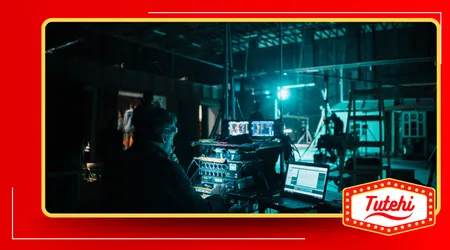
THE The invisible work of executive theater production. It sustains the magic of the stage, transforming complex scripts into rich and unforgettable cultural experiences for the audience.
Advertisement
Behind every curtain that opens, there is a financial, legal, and logistical engineering operation that is often ignored by those who see the bright lights.
This article unveils the silent mechanisms that bring the contemporary art scene to life, far removed from the vanity of applause.
Summary
- Who is the executive producer in modern theater?
- What are the practical functions of executive production?
- How does financial management impact the show?
- Where does logistical planning prevent crises?
- Table: Average Budget Allocation in Theatre
- Frequently Asked Questions (FAQ)
Who is the executive producer in modern theater?
Many viewers believe, almost instinctively, that the success of a play rests exclusively on the shoulders of the actors and the director.
THE The invisible work of executive theater production.However, it is what guarantees the necessary material structure so that the show does not fall apart.
Advertisement
This professional acts as the often precarious point of equilibrium between creative delirium and the cold hard facts of numbers.
The authority of this sector grew as incentive laws and public notices became veritable bureaucratic labyrinths.
Coordinating a season requires more than just "willpower"; it demands knowledge of administration, copyright law, and a keen sensitivity to human relations.
It's a strategic leadership that rarely appears in official photos, but without which the theater wouldn't even exist.
Institutions such as Itaú Cultural This validates the urgency of mapping these technical management skills. There is something unsettling about how the market still underestimates the importance of this role, while innovative projects die on paper due to sheer administrative ineptitude.
Flawless execution is the only real guarantee of survival for the national art market today.
What are the practical functions of executive production?
The practical work begins months before the first rehearsal, with a reading of the work that seeks what lies between the lines.
The producer needs to see the cost of each light and the feasibility of each set change even before the technical team does.
Every detail requires secure contractual validation and daily monitoring that leaves no room for distractions.
Ensuring that theater permits are up-to-date is one of those vital responsibilities that no one notices until something goes wrong.
THE The invisible work of executive theater production. It involves constant dialogue with public bodies and regulatory agencies, often at inconvenient times.
This legal protection is what safeguards the physical integrity of everyone involved in the artistic process.
Mediating conflicts behind the scenes is perhaps the most exhausting yet necessary part of this routine. Aligning inflated egos, unrealistic artistic expectations, and severe budgetary constraints requires almost artisanal patience.
A balanced work environment is not a bonus, but a direct reflection of management that knows how to listen and make decisions.
How does financial management impact the show?
Managing the cash flow of a season requires mathematical rigor and a market-oriented vision that artists rarely possess.
The funds raised through sponsorship need to be intelligently distributed between production, promotion, and the daily upkeep of the cast.
Mistakes at this stage are often fatal, interrupting careers and generating debts that haunt companies for years.
The tracking of invoices and expense reports is subject to government regulations that do not tolerate amateurism.
THE The invisible work of executive theater production. It ensures that every penny invested is used correctly and, above all, legally.
This administrative transparency is what builds a company's reputation with major investors.
Optimizing resources without sacrificing the aesthetics of the show is the great dilemma that drives the producer's daily work.
Negotiating with sound and lighting suppliers requires reliable partners and contracts that leave no room for ambiguous interpretations.
Financial sustainability is what allows the machine to keep turning and employing qualified professionals.
+ The work of theatrical stage management between acts and scenes.
Where does logistical planning prevent crises?
Setting up the sets and fine-tuning the lighting requires a logistical schedule that borders on militaristic.
Losing a single theater performance due to poor planning can destroy the budget of any independent company.
Risk management anticipates common problems, such as a truck breaking down on the road or a projector suddenly failing.
Centralizing travel, accommodation, and food information protects the mental health of the cast while on tour.
THE The invisible work of executive theater production. It ensures the emotional stability necessary for artists to create without external noise.
When logistics work perfectly, nobody notices the complexity of the machine; the audience only sees the fluidity of the scene.
Coordinating arrival and departure times prevents excessive physical exhaustion of the technical team, something that is often overlooked.
Productivity in testing increases considerably when working conditions respect minimum human limits.
The success of a show is the result of this continuous, silent, and profoundly technical operational care.
+ Fragmented theater and the breaking of narrative linearity.
Average Budget Allocation in Theatre
The table below reflects the typical financial distribution in medium-sized professional productions in the current scenario.
| Cost Category | Percentage of the Budget | Main Scope |
|---|---|---|
| Creation and Cast | 35% | Fees for actors, directing, dramaturgy, and rehearsals. |
| Set Design and Technique | 25% | Scenery, costumes, lighting, sound, and operators. |
| Publicity and Marketing | 20% | Consulting, paid traffic, and social media. |
| Administration and Fees | 12% | Copyright (SBAT), licenses and ECAD. |
| Contingency Reserve | 8% | Unexpected events, maintenance, and emergency logistics. |
The strategic importance of legal counsel.

Negotiating copyright for texts and soundtracks requires legal support that goes far beyond the basics.
Disregard for intellectual property often results in lawsuits that paralyze presentations and generate substantial losses.
The executive producer acts as a shield, protecting the work against violations that could prematurely end the season.
Formalizing employment contracts within the law protects the stability of the project and the dignity of those involved.
THE The invisible work of executive theater production. combating precarious employment, an evil that still plagues the artistic environment.
Legal certainty attracts better professionals and business partners who value compliance and ethics.
Keeping your documentation up-to-date is what allows you to participate in public calls for proposals and cultural funding opportunities.
Bureaucracy, when well organized, ceases to be an obstacle and becomes a powerful tool for promotion.
Crisis mediation and the human factor.
Serious technical problems often occur during the most tense moments, usually minutes before the premiere.
Replacing vital equipment or dealing with a medical absence requires composure and a solid network of contacts in the market.
The executive producer resolves these operational emergencies without a single viewer noticing the chaos behind the scenes.
Adapting the show for different stages during tours requires a flexibility that borders on technical improvisation.
THE The invisible work of executive theater production. It redesigns lighting maps and stage logistics with enviable agility.
This versatility maintains the artistic quality intact, regardless of the infrastructure available in the city being visited.
Managing the unexpected cancellation of a session requires a social responsibility that defines the character of the production company.
Refunding tickets and rescheduling dates requires transparent and efficient communication channels with the public.
+ Backstage at the theater and the flow of professionals in the wings.
Technology and the modernization of processes
Cloud-based spreadsheets and management software have dramatically changed process control in contemporary theater.
Communication between departments became instantaneous, drastically reducing the margin for error due to information failures.
The modern producer uses analytical data to understand audience behavior and adjust sales strategy.
Targeted digital marketing campaigns have replaced random leaflet distribution, optimizing every dollar invested.
THE The invisible work of executive theater production. Monitors conversion metrics to ensure the room is full every night.
Technology enhances the artist's voice, but it requires attentive management to avoid wasting resources on ineffective channels.
Automated reporting systems facilitate audits by regulatory bodies and bring peace of mind to producers.
Detailed reports allow for a critical analysis of what worked and what needs to be discarded in future projects.
Administrative modernization has raised the professional level of the market, requiring constant technical updating.
Fundraising as the driving force behind art.
Developing cultural projects that appeal to the corporate market requires persuasive skills grounded in data.
Companies seek to associate their brands with initiatives that generate real social impact and positive visibility.
The executive producer translates abstract artistic concepts into tangible and appealing marketing proposals for the private sector.
This robust financial structure provides the necessary autonomy for the cast to focus solely on artistic creation.
Providing exemplary accountability is what builds loyalty with sponsors for future seasons. The market values those who meet deadlines and deliver measurable social results, going beyond mere entertainment.
Institutional credibility is a valuable asset, built brick by brick over years of hard work.
THE The invisible work of executive theater production. It provides the solid foundation upon which artistic talent can finally shine safely. Without this mechanism, art would lose its power and its ability to resonate in society.
The professionalization of the sector strengthens the creative economy, generating jobs and circulating capital in various regions.
Supporting theater means recognizing the efforts of those managers who work quietly behind the scenes. To understand the guidelines governing cultural funding today, visit the portal of... Funarte and explore the new regulations in the sector.
Frequently Asked Questions (FAQ)
What is the real difference between an executive producer and a theater director?
The director is responsible for the artistic concept and the direction of the actors. The executive producer secures the financial viability of the project and ensures that the legal and logistical structure functions properly.
How does the theater raise funds?
This can happen through tax incentive laws (such as the Rouanet Law), public calls for proposals, direct corporate sponsorships, or the sale of shares to cultural investors.
What is required of a successful executive producer?
Training in management, expertise in incentive laws, negotiation skills, and, above all, extreme resilience to deal with last-minute unforeseen events.
Does the executive producer need to be present at all sessions?
Although not mandatory for all performances after the premiere, its presence is vital during transitions, travel, and unforeseen technical crises.
How is the box office revenue divided after the show?
Gross revenue is subject to deductions for taxes, convenience fees, theater percentage, royalties, and bank fees before reaching the production company.