
The work of theatrical stage management between acts and scenes.
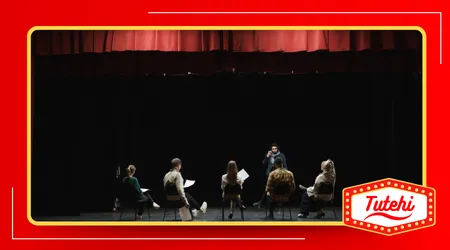
The world behind the scenes comes to life through the work of theatrical counter-stage management between acts and scenes, a role that, honestly, is often the dividing line between amateurism and excellence.
Advertisement
While the audience is lost in the glare of the spotlights, a silent choreography unfolds in the shadows, where mistakes are not an acceptable option.
Understanding this mechanism invites us to look at theatre beyond its aesthetic surface. In the following lines, we explore the raw technique and operational sensitivity of those who sustain the performance without ever appearing for applause.
Article Summary
- The true role of the stagehand in organized chaos.
- Time logistics: the fight against the clock.
- The technical arsenal hidden in the wings.
- Operational safety and rigorous communication.
- Frequently asked questions about the technical profession.
What does a theatrical stagehand do between acts and scenes?
The specialist responsible for theatrical counter-stage management between acts and scenes It acts as the central nervous system of the stage, solving problems that the audience doesn't even know exist.
He doesn't just carry objects; he manages the emotional continuity of the piece through rigorous physical order.
Advertisement
The role demands an almost instinctive reading of stage scores and stage maps that appear as hieroglyphs to the untrained eye.
It's an agility that blends physical strength with almost surgical precision to avoid displacing even a millimeter of the set.
There's something fascinating about this invisibility, because work well done is precisely that which no one notices has happened.
Today, this execution defines the prestige of large companies, transforming the "behind the scenes" into a high-performance operation.
++ Digital audio mixing console for theater and sound control of the play.
How does timed organization work behind the scenes?
The planning of theatrical counter-stage management between acts and scenes It is born long before the first sound signal, being forged in exhaustive and repetitive technical tests.
Each scene change is a choreography in itself, with marked positions on the floor that don't allow for dangerous improvisation.
Timing precision is a constant obsession, monitored by stage managers who operate internal communication systems in real time.
A second of hesitation can generate a noise capable of destroying the climax of a dramatic scene.
To visualize this logistics, it's worth observing how tasks are distributed during blackouts or quick shift changes. The table below details the areas of operation that keep the structure running under pressure.
++ Marking rehearsals and the spatial design of the staging
| Area of Activity | Primary Responsibility | Average Execution Time | Impact on the Show |
| Mobile Set Design | Replacement of panels and platforms | 45 to 90 seconds | Total change of atmosphere |
| Stage Props | Actors switching objects from hand to hand. | 15 to 30 seconds | Ensuring narrative continuity |
| Special Effects | Replacement of elements and pyrotechnics | 60 to 120 seconds | Maintaining sensory impact |
| Stage Cleaning | Removal of residue and marks | 20 to 40 seconds | Fall prevention in the dark |
What are the essential tools for scene transitions?

Efficiency in theatrical counter-stage management between acts and scenes It relies on a utility belt that any technician carries as if it were an extension of their body.
Blue flashlights and fluorescent strips are the eyes of those who work where artistic lighting doesn't reach.
The use of blue tint is a classic trick, allowing peripheral vision without letting unwanted glare into the viewer's field of vision.
The tapes on the floor, often colored, indicate the exact location of each chair or table leg.
Wireless intercoms complete the arsenal, allowing the team to move as a single organism under the command of the technical director.
Technology has made the process easier, but human perception of scene timing is still the deciding factor.
Who coordinates the technical team during the show?
Behind-the-scenes leadership is exercised by the stage manager, to whom the theatrical counter-stage management between acts and scenes He responds with absolute loyalty.
He is responsible for triggering the "cues" that synchronize light, sound, and cargo movement.
The strictness of this hierarchy prevents haste from becoming a real risk, especially on complex stages with pits and heavy machinery.
Without that central voice, the backstage environment would quickly become a dangerous labyrinth for technicians and actors alike.
Influential portals in the sector, such as PlaybillThey emphasize that the success of a Broadway musical depends entirely on this command structure.
The brilliance of the protagonists is only possible because there is an unshakeable technical foundation supporting every step.
What are the safety regulations for working in the dark?
Protecting physical integrity is the golden rule in theatrical counter-stage management between acts and scenes...where adrenaline tends to surge during blackouts.
Reinforced boots and gloves with good grip are not suggestions; they are vital collective protective equipment for the operation.
Behind the scenes, there are hidden traps such as taut steel cables and ladder rungs that demand extra caution.
Safety training specifically designed for the entertainment industry has become the standard for preventing tragedies on large stages.
Discreet guiding lights provide a path for footsteps without disrupting the aesthetic intended by the lighting designer, creating a safe route between the legs in the wings.
Preventing accidents is, ultimately, the most efficient way to ensure the show never has to stop.
++ Theatrical lighting cue and the timing of visual storytelling.
How has technology transformed the changing landscape?
Industrial automation has invaded performance venues, changing the face of... theatrical counter-stage management between acts and scenes in modern and technological theaters.
Software-controlled rotating stages and fast elevators brought a monumental scale that manual effort alone could not achieve.
However, human presence remains the ultimate safety filter, correcting electronic flaws that could cripple an entire operation.
Today's stage technician needs to understand both classical mechanics and digital interfaces and programming logic.
This fusion of engineering and sensitivity elevated theater to a cinematic level, demanding professionals with agile minds and precise hands.
The evolution of machines did not replace the stagehand; it merely gave him more powerful tools to create the impossible.
Conclusion
The success of a production rests on the meticulous and sometimes exhausting work carried out in the shadows of the stage.
The dedication of these art workers allows the transition between realities to occur in a fluid, elegant, and, above all, safe manner.
To value this engineering aspect is to understand that theatre is a collective endeavor where technique and poetry go hand in hand.
When the curtain closes and the audience applauds, part of that recognition belongs to those who are already preparing the next act.
For those seeking official guidelines on cultural professions and sector regulations in Brazil, the portal of Ministry of Culture It offers essential resources for career development.
FAQ – Frequently Asked Questions
What is the practical difference between a stagehand and a set designer?
The set designer conceives the aesthetics and constructs the visual concept, while the stagehand is the practical executor who manipulates the elements in real time.
How to deal with extremely rapid changes in scenario?
This is solved by using "track-based scenarios" and a division of tasks where each technician only works on one specific object.
Is it mandatory to wear black clothing backstage?
Yes, because matte black doesn't reflect the light from the lighting cannons, ensuring that the technician "disappears" against the black backdrop of the aisles.
Does the stage manager also take care of the actors' costumes?
Generally not; that's the stagehand's job. The stage manager focuses on props and the physical structure of the stage environment.
How does the team communicate without the audience hearing?
Headset systems (intercoms) with directional microphones and visual signals made with low-intensity flashlights are used.