
Backstage at the theater and the flow of professionals in the wings.
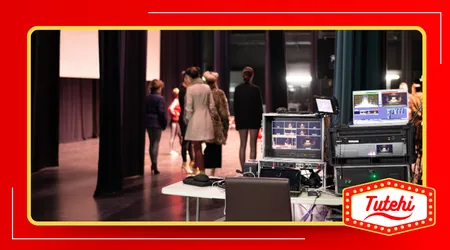
THE backstage at the theater It's not just the other side of the coin; it's the invisible and noisy central nervous system that sustains the illusion of whoever occupies the armchair.
Advertisement
Far from the elegance of velvet armchairs, the wings operate under a regime of controlled urgency. It is a space where physics prevails over poetics, demanding that tons of wood and metal move with the silence of a ghost.
In this guide, we delve into the machinery that, in 2026, balances the weight of tradition with the coldness of digital systems. Understanding how these worlds collide is the first step to respecting the complexity of the spectacle.
Summary
- The hierarchy of shadows: who makes the show happen?
- The choreography of the invisible: traffic and logistics
- Technology in 2026: Automation takes center stage.
- Table: Division of technical responsibilities
- Safety and survival on the scene
- Frequently asked questions about backstage
Who are the professionals who work backstage in the theater?
There's a mystique surrounding those who inhabit the shadows, but the reality is purely technical. The stage director, or stage manager, is the figure that centralizes the chaos.
He doesn't just observe; he dictates the vital rhythm of the play. If a command fails, the lights don't come on and the actor loses his footing. It's a position of absolute authority under pressure.
Advertisement
Below this leadership, we find the machinists. They are responsible for the refined brute force, operating counterweight systems and motors that lift entire sets above the heads of the cast.
Meanwhile, the stagehands are the guardians of detail. There's something almost obsessive about their work: a glass out of place can ruin an entire scene of domestic realism.
We cannot ignore the sound and lighting technicians. They operate in booths that resemble aircraft cockpits, monitoring frequencies and signals that the average human ear cannot even process.
Finally, the wardrobe assistants and makeup artists perform miracles in seconds. It is backstage, amidst the sweat and the rush, that the actor ceases to be an individual and becomes the character.
How does human logistics work backstage?
Managing the flow of people in a backstage at the theater It's like organizing an obstacle course in the dark. Every square meter is contested between sets and artists.
The use of fluorescent tape on the floor is not just decoration, it's a matter of survival. It marks the safe paths along which technicians transport structures weighing hundreds of kilograms.
Silence here is a working tool. Contrary to what many believe, communication is not verbal, but rather done through precise gestures and discreet light signals.
In 2026, traffic is assisted by infrared monitoring systems. This prevents a technician and an actor from colliding during a frantic and poorly lit scene change.
The "readiness" areas are sacred zones. No one speaks, no one breathes heavily. It's the limbo where the artist prepares psychologically before crossing the threshold of light.
What technologies will dominate backstage theater in 2026?
Automation has gone from being a luxury reserved for grand musicals to becoming the standard for safety. Today, intelligent load sensors prevent lighting rods from collapsing due to fatigue.
The use of tablets with augmented reality allows the assembly team to visualize the final scene on the empty stage, optimizing hours that would previously have been spent on measurements.
Another drastic change is the health monitoring of the technicians. Sensors in vests detect levels of exhaustion and heat, preventing accidents on long and grueling tours.
High-efficiency LED lighting now communicates with artificial intelligence systems that adjust the color temperature as the lamp degrades, while maintaining the original aesthetic.
Even with so much technology, the human factor remains the master. The machine executes the movement, but it is the technician's eye that validates the artistic intention of the moment.
+ Stage counterweights and the mechanics of suspended sets.
Critical functions and the competency matrix
The common mistake is thinking that anyone can "help" behind the scenes. The technical expertise required today borders on engineering and real-time crisis management.
A sound operator doesn't just push buttons; they need to understand physical acoustics to compensate for the sound absorption of a crowded audience or a humid theater.
Node backstage at the theaterTrust is the only currency that has any value. If the stagehand doesn't trust the stage manager's signal, the show simply doesn't happen.
+ Quick costume changes and the logistics behind the scenes.
Table: Backstage Technical Operation
| Function | Primary Activity | Impact on the Show |
| Stage Director | "Cue" command | Total synchronization of the work |
| Driver | Rod/motor operation | Dynamic and deep stage presence |
| Sound Technician | Mixing and feedback | Intelligibility and immersion |
| Illuminator | Environmental control | Focus and visual storytelling |
| Stagehand | Props management | Continuity and fluidity |
The engineering of quick exchanges and transitions
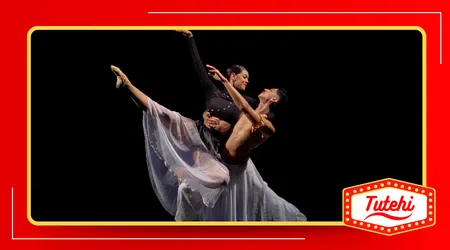
A well-executed scene transition is as satisfying as a ballet choreography. It requires each member of the crew to know exactly where to place their feet.
Often, the scenery that the audience sees "disappearing" is being dismantled in absolute silence just two meters away, behind a thin velvet curtain.
The use of hydraulic carts and sliding pallets has greatly facilitated this process. What used to take five minutes now happens in a thirty-second blackout.
In the context of backstage at the theaterIn this context, assembly planning is an exercise in applied geometry. It's necessary to anticipate the stacking of parts so that nothing blocks the exits.
Fire safety also dictates the flow. Modern set materials are treated with chemical retardants, and technical escape routes are never, under any circumstances, obstructed.
Silence as a professional ethic backstage.
There is a strict code of conduct in the workplace behind the scenes. Disrespect for silence is seen as unprofessional and can cost a technician their job.
THE backstage at the theater It requires everyone to become shadows. Wearing dark clothing and fabrics that don't make noise when walking is part of the basic survival uniform.
This invisibility is strategic. The audience must believe that the set appeared by miracle, and any visual interference from the technical team breaks this pact of suspension of disbelief.
Ethics also involves discretion. What is heard backstage stays backstage. The wings are both a confessional and a battlefield.
Working here requires a controlled ego. Technical recognition comes from the success of the scene, not from individual applause, which is almost always directed only at whoever is in the spotlight.
+ Theatrical stage management and precision in scene changes
Training: the future of the stage professional
The theater market in 2026 no longer accepts amateurism. Specialization in areas such as data networks and stage automation has become the differentiating factor among great professionals.
Operating a modern lighting console requires knowledge that goes beyond aesthetics; it demands an understanding of digital communication protocols and electrical stability.
Practical experience in backstage at the theater It remains the best school, but international certifications in height and electrical safety have become basic requirements in large companies.
Institutions that promote technical culture are vital. Constant learning ensures that theatre, an ancient art form, remains relevant in a world saturated with screens.
Whoever controls the backstage controls time. It is in the precision of the darkness that the light is built, moving crowds and transforming technical effort into lasting emotional memory.
Theatre is a living machine. To explore its history and social impact, the Itaú Cultural It offers a fundamental collection about the performing arts in Brazil and around the world.
FAQ: Questions about how the backstage area works
What is the biggest technical challenge backstage?
Controlling unforeseen events in real time. From a cable breaking to an actor forgetting a prop, the team needs to react in seconds without the audience noticing.
Why do people say "shit" backstage?
It's a traditional expression of good luck. Its origin dates back to the time of horse-drawn carriages: if there was a lot of horse manure in front of the theater, it meant the place was full.
How do technicians see in the dark?
Lanterns with blue or red filters are used to illuminate the path without creating light sources that leak onto the stage or distract the audience.
Does the stage director watch the play?
He watches through video monitors and from a side view of the stage. His role is not to appreciate the art, but to monitor the technical execution of every detail.
Are there weighting standards for scenery?
Yes, each theater has a maximum load chart for its support rigging, and the stage engineer must validate each setup to prevent collapses.