
Radio theatre and dramaturgy constructed through sound.
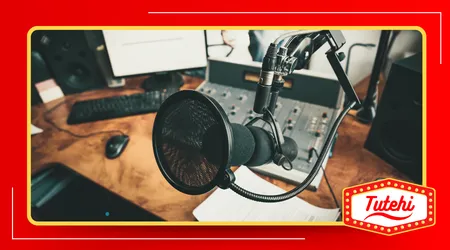
THE radio drama It survives as the ultimate proof that vision, although dominant, is only one of the paths to constructing reality.
Advertisement
In 2026, immersed in a visual excess bordering on exhaustion, we realize that sound not only fills the silence, but sculpts entire architectures in the emptiness of the living room or in the isolation of headphones.
This art of projecting worlds without the aid of light is now reborn with a technical sophistication that the battery-powered radio never dared to imagine.
This is not a sterile nostalgia, but a deliberate evolution of sound dramaturgy, which has regained its breath in the era of the omnipresence of podcasts and immersive audio.
In this guide, we delve into the intricacies of audio engineering and the power of vocal performance to understand how screenplays transform into complete sensory experiences, reclaiming the authority of a genre that has never ceased to be modern.
Advertisement
Summary
- The origin and evolution of sound dramaturgy.
- How technical production works in 2026.
- The importance of sound design and sound effects.
- The cultural and educational impact of radio drama.
- Differences between audiobooks and radio plays.
- Frequently asked questions about the genre.
What is radio drama and what is its historical importance?
Far from being a mere precursor to television, radio was the first mass media tool to democratize access to fiction without the need for a physical trip to large theaters.
THE radio drama It reached its maturity in the 1930s, culminating in that famous episode where Orson Welles' voice made the world believe in a Martian invasion.
What we often forget is that the panic didn't stem from the news itself, but from the precision with which the dramaturgy used silence and noise to validate the absurdity.
Unlike on stage, where gesture precedes word, here the voice is the actor's own body, carrying in each inflection the weight of non-existent sets.
There is something unsettling about the way the human brain accepts the invitation of a single voice to fill in the details of a face or the vastness of a landscape.
Today, this practice is transitioning to the digital realm not as a revival, but as a conscious aesthetic choice by creators who prefer the freedom of imagination to the dictatorship of high-resolution screens.
How does sound replace image in sound dramaturgy?
Producing audio drama is like exercising a kind of "narrative echolocation," where the sound design positions the listener exactly where the action demands it, whether in a vast cathedral or a stuffy cubicle.
The sound of footsteps on gravel or the metallic clinking of a key are not merely effects; they serve the function of a physical setting, establishing a "truth pact" between the work and the listener.
If the sound fails in its texture, the illusion instantly crumbles, because the ear is a far more accurate lie detector than the eye.
Inside the radio dramaThe screenwriter needs to avoid the trap of stating the obvious, preferring dialogues that reveal the environment in an oblique and elegant way, without sounding like an explanatory medicine leaflet.
The use of technologies such as spatial audio (Dolby Atmos) has elevated this game, allowing the trajectory of a character moving around the listener to create a real physical depth in a purely virtual environment.
++ Proletarian theatre and class engagement on stage
What are the essential technical elements for a good radio drama?
The quality of a sound piece depends on the sensitivity of microphones that capture not only the text, but also the micro-emotions present in a short breath or an almost inaudible sigh.
Modern sound design goes beyond incidental noise, encompassing sounds that punctuate the action and background textures that manipulate the audience's psychological tension in an almost subliminal way.
Node radio drama In contemporary times, digital mixing allows for infinite layers of sound, eliminating technical imperfections so that the rawness of human interpretation shines through without unnecessary interference.
++ Satirical comedy and political criticism in theatrical performances
Table: Comparison between Dramatic Media
| Feature | Stage Theatre | Film/TV | Radio Theatre |
| Main Feature | Physical Presence | Visual Image | Soundscape |
| Audience Focus | Sight and Hearing | Focused Gaze | Active Imagination |
| Set design | Real Objects | Computing/Sets | Audio Effects |
| Production Cost | Medium/High | Very High | Low/Moderate |
| Accessibility | Located | Global | Global and Inclusive |
Who are the professionals involved in creating an audio drama?
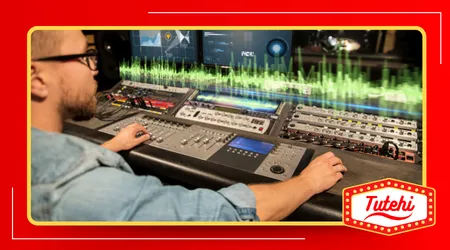
The vocal acting director needs a perfect pitch for emotion, guiding the cast to abandon visual aids and focus entirely on the modulation and rhythm of their speech.
Screenwriters specializing in this niche write "sound cues," detailed scores that indicate when the wind should howl louder to signal a change in the protagonist's mood.
In this context of radio dramaIn this context, the sound engineer acts as an invisible set designer, adjusting levels and frequencies to ensure that the voice never loses prominence over the soundtrack.
This symbiotic collaboration is what transforms air vibrations into cinematic narratives, proving that the complexity of a scene lies much more in what is suggested than in what is shown.
Where can we listen to and how can we produce radio drama today?
The epicenter of this renaissance is podcast aggregators, where high-budget fiction series attract millions of listeners hungry for stories that don't require staring at an LED screen.
Many communication schools are reviving radio drama as a fundamental exercise in diction and emotional control, preparing students for the challenges of a market that increasingly values the voice.
To produce a radio drama In 2026, what is required above all is an environment with honest acoustic treatment, preventing the echo of the room from revealing the fragility of the production and breaking the listener's enchantment.
Accessible software has democratized the process, but the real barrier to entry remains the quality of the script and the actors' ability to convey truth through a microphone.
++ The sacramental play and its allegorical religious structure.
What are the pedagogical advantages of using sound in education?
Actively listening to dramatic pieces is a vigorous brain exercise, developing concentration and empathy in a way that passive video consumption rarely achieves.
Educators use the radio drama to bring literary classics to life, transforming dense texts into vibrant performances that the students themselves record and edit in school labs.
This process encourages group coordination, since the synchronization between speech and the onset of a sound effect requires shared attention and a very well-tuned collective rhythm.
Listening to well-constructed dramas teaches one to discern nuances of tone and intention, essential tools for interpersonal communication in a world increasingly mediated by audio and voice messages.
The power of sound lies in its ability to be both invasive and welcoming, occupying the mind of the listener without asking permission to enter.
THE radio drama It is not a cultural fossil, but a living and mutable organism that uses technology to expand the limits of our own capacity to fantasize.
By prioritizing the truth of the voice and the precision of the sound design, we ensure that the dramaturgy continues to evolve into ever deeper forms of human connection.
To explore how sound continues to shape global culture, it's worth checking out the immersive productions of... BBC Culture, a gold standard in fiction innovation for the ears.
FAQ: Frequently Asked Questions
1. Does radio drama still make sense with YouTube?
It makes more sense than ever. We are experiencing an epidemic of eye strain, and audio allows the viewer to be the art director of their own experience while walking or driving.
2. What is the difference between a radio soap opera and radio drama?
Radio dramas are generally long and melodramatic. Radio dramas seek a more concise and varied approach, exploring everything from psychological horror to police suspense in a more cinematic way.
3. How do I start recording a sound production?
Focus first on a good script. Equipment is secondary if the story isn't designed for sound. Then, look for a microphone that respects the natural timbre of the human voice.
4. Does 8D audio really improve the story?
Immersive technologies like 8D or binaural audio help with immersion, but they are only tools. If the script is weak, no spatial effect will be able to keep the listener engaged for very long.
5. Is there a real market for new voice actors in this genre?
The market for "original voice acting" in sound fiction is booming, creating opportunities for actors who can perform without relying on a camera to convey their emotions.