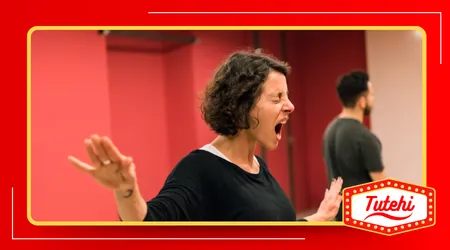
THE verbose theater It represents one of the most intriguing and challenging aspects of contemporary global dramaturgy, transforming the incessant flow of words into pure, impactful stage action.
Advertisement
This artistic aesthetic deliberately rejects traditional minimalism, using verbal overflow and discursive saturation as central tools to destabilize the viewer.
There is something profoundly unsettling here: the stage becomes a hyperactive reflection of our own everyday overexposure.
Far from being merely an empty aesthetic device—a common mistake made by those who analyze the genre superficially—linguistic excess fulfills a crucial political function in modern productions.
It exposes the failure of direct communication, where the accumulation of discourse paradoxically serves to camouflage chronic human isolation.
Advertisement
Understanding this dynamic requires a close look at the evolution of textual structures and the new interpretative demands placed on contemporary actors.
To navigate this dense universe without getting lost in the noise, we've structured an analysis that goes beyond the obvious, dissecting the fundamental pillars of this unique artistic expression:
The concept and historical origins of the verbal phenomenon.
The dramatic function of saturation and excess on stage.
Great authors and fundamental references in theatrical literature.
The technical challenges for contemporary performance.
What is verbose theatre and how is it defined in dramaturgy?
To understand the verbose theaterIt is necessary to understand that the word ceases to be merely a means of transmitting information and becomes the event itself.
In this vein, the text is characterized by long monologues, overlapping dialogues, an absence of conventional punctuation, and a frenetic pace that mimics mental chaos.
This is not about empty verbosity, but rather a conscious aesthetic choice where sound and speed matter as much as meaning.
Historically, this approach gained traction in the post-war period, but reached its peak in contemporary times with authors who reflect the anxieties of the digital age.
Language is pushed to its physical limits, transforming the actor's breath into a constant source of tension for the audience.
Thus, the performance constructs its narrative not through scarcity or contemplative silence, but through the complete exhaustion of human discursive possibilities.
What are the main functions of excess as dramatic language?
The strategic use of excess in dialogue acts as a mirror reflecting the psychic fragmentation of modern characters.
When words burst forth in uninterrupted torrents, they often manifest a desperate attempt to fill existential voids or to avoid confronting silence.
The text transforms into a psychological armor against pain, loneliness, and the imminence of tragic failure.
Furthermore, this verbal saturation challenges the viewer's rational perception, inviting them to feel the textual bombardment rather than simply decoding it intellectually.
The aesthetic experience becomes sensory and physical, bringing theater closer to industrial music or rhythmic performance poetry.
Excess, therefore, functions as a powerful political tool for provocation and social de-alienation within the theatrical space.
Who are the key figures who shaped this stage aesthetic?
Globally, names like Thomas Bernhard, Elfriede Jelinek, and Sarah Kane revolutionized stage writing by adopting massive and unforgiving textual structures.
Bernhard, for example, used the obsessive repetition of terms to criticize Austrian institutions and social hypocrisy with surgical precision.
His works are veritable blocks of compact text that demand stamina and absolute technical precision from the performers.
In the Brazilian context, the style finds powerful echoes in productions that discuss identity and urban violence.
Experimental groups and new playwrights use hyperbolic language to convey the urgency of the peripheries and the cultural clashes of the country.
For those wishing to delve deeper into the history of Western dramatic literature, the website of Itaú Cultural Encyclopedia It offers a broad overview of the evolution of national textual techniques.
How do actors prepare for the technical challenges of this style?
To act in a show of verbose theater It requires a level of physical, vocal, and mental preparation that is radically different from traditional psychological realism.
Professionals need to master advanced diaphragmatic breathing techniques to sustain long periods of speech without compromising the clarity of their articulation.
Muscular endurance and the ability to memorize logically become the basic pillars for the artist's survival on stage.
Beyond the purely biomechanical aspect, there is the immense challenge of keeping emotional intention alive amidst an avalanche of words.
The actor cannot get lost in the musicality of the text, needing to find the dramatic micro-fissures where the character's humanity is revealed.
It is a work of extreme stage precision, comparable to the technical rigor required of a musician performing a complex score.
What characteristics differentiate verbosity from conventional dramaturgy?
The table below clearly summarizes the main structural and aesthetic differences between the traditional action-focused model and the approach based on verbal saturation.
To be the action itself and to generate scenic saturation.
The Use of Silence
Dramatic pauses to create subtext.
Rejected or used only after exhaustion.
Textual Rhythm
Based on realistic naturalistic conversation.
Frenetic, musical, obsessive, and cumulative.
Actor's Focus
Psychological construction and naturalness.
Technical rigor, vocal precision, and breath control.
Relationship with the Public
Empathic identification and linear reflection.
Sensory impact and cognitive overload.
What are the main functions of excess as dramatic language?
There is a clear political dimension when the spectacle deliberately chooses to bury the conventional narrative under layers of discourse.
Contemporary society, hyper-connected and noisy, finds in the stage a distorted mirror of its own daily communicative contradictions.
The accumulation of words ironically reveals our profound collective inability to listen and engage in genuine dialogue.
In current productions, this discursive overflow often destabilizes ideological certainties and ready-made answers brought from the outside by the average viewer.
The text does not seek comfortable consensus, but rather the reflective shock that arises from productive mental fatigue.
In this way, the barrier of passive entertainment is broken, establishing a territory of legitimate intellectual provocation.
How do actors prepare for the technical challenges of this style?
The performer's exhaustion is not an accident, but rather a calculated aesthetic element in contemporary staging.
The actor's real sweat and fatigue humanize the abstract text, giving it an undeniable biological truth.
It is precisely in this state of bodily limitation that the artist's defenses fall, revealing the power of the scene.
Rehearsing a show of this nature requires months of dedicated focus on precise rhythm and proper vocal resonance.
The casts often function like gears in a complex sonic machine, where every millimeter pause alters the final result.
Absolute technical rigor becomes the only guarantee against the trivialization of the original artistic concept.
THE verbose theater It establishes itself as a necessary and visceral artistic response to an increasingly noisy and disconnected world.
By transforming words into raw material for excess and provocation, this aesthetic challenges creators and spectators to rediscover the power of discourse in the public sphere.
Far from being a mere exercise in scholarship, it remains alive as one of the most powerful ways to investigate the fractures of our time.
To explore artistic expressions that engage with the radical nature of performance and body language, it is worthwhile to visit the international portal of... The Performance Project, which maps contemporary global trends.
FAQ (Frequently Asked Questions)
Does verbose theatre completely eliminate physical action on stage?
No, the physical action simply shifts to the vocalization itself and to the actor's physical exhaustion during the performance.
Can any long text be considered part of this aesthetic trend?
Not necessarily, as the style demands that excess have a deliberate, rhythmic, and structuring dramatic function in the staging.
How does the audience typically react to this type of theatrical proposal?
Reactions range from hypnotic rapture to bewilderment, due to the high demand for attention and sensory impact generated.
Does this dramatic style have any direct connection to expressionism?
Yes, he inherits from expressionism the desire to project subjective and distressing mental states directly onto the external reality of the stage.
SEO editor specializing in creating strategic and optimized content for various niches. Passionate about the automotive world — from cars to trucks — I bring my curiosity and attention to detail to every topic I cover, always combining creativity with performance.