
The legacy of the USP School of Dramatic Arts in Brazil

The legacy of School of Dramatic Arts Distance Learning USP In Brazil, it has undergone decades of profound transformations and consolidated the conceptual basis of contemporary national theatrical practice.
Advertisement
Below, you will find a structured summary to help you navigate through the main historical aspects, pedagogical contributions, and cultural impacts that define this prestigious and long-standing institution.
- History and Origins: The foundation conceived by Alfredo Mesquita.
- The Institutional Transition: Permanent entry into the USP structure.
- Political Resistance: The role of the school during the darkest years of the dictatorship.
- Pedagogy and Impact: The practical methodology that revolutionized the stage.
- Scenic Infrastructure: The role of rehearsal rooms and laboratories.
- Diversity and Inclusion: An openness to contemporary agendas and scenes.
- Market Insertion: The paths of graduates in the current cultural landscape.
- Data and Relevance: Statistics and prominent names of graduates from the school.
- Frequently Asked Questions: Common questions answered directly.
Who conceived the idea for this landmark educational approach in the performing arts?
The intellectual from São Paulo sought to overcome the amateurism and bad habits of the time, offering his students technical rigor and theoretical depth that resonated with the world's artistic avant-gardes.
Alfredo Mesquita financed the early years out of his own pocket, bringing in renowned European directors and intellectuals to revitalize the São Paulo theater scene.
His humanist vision established an unprecedented standard of rigor, where literature, art history, and vocal technique were as vital as physical rehearsal.
Advertisement
This vibrant environment attracted restless minds who saw in theatrical practice a tool for transformation and social commentary during times of profound urban change.
The school originated in a large house on Estados Unidos Street, later moving to Lopes Chaves Street, profoundly shaping the cultural landscape of the city of São Paulo.
The students faced grueling study and rehearsal routines, but found in the passion of their teacher Alfredo the necessary fuel to break through aesthetic barriers.
This simple treat warmed the body and united the students around common ideals, creating a sense of community that persists as a defining characteristic of the school.
Over the years, the prestige of technical training began to attract the attention of the academic community, signaling that greater steps needed to be taken.
When did the institution officially integrate into the university structure?
The school's autonomy reached a decisive point in 1969, the year it was officially integrated into the prestigious... School of Communications and Arts of USP.
The change generated heated debates among the students of the time, who feared the loss of the essentially practical essence of... School of Dramatic Arts Distance Learning USP.
Time has proven that institutional merging protected the space from political censorship and guaranteed crucial public funding for the survival of productions.
This transition to the University City consolidated the public dimension of the pedagogical project, incorporating practical technical-level training within a solid academic research structure.
The new location broadened the creative horizons of the students, who began to engage with the university's film, visual arts, and journalism departments.
This intellectual symbiosis strengthened the experimental nature of the course, allowing for the crossing of artistic languages that redefined the aesthetics of graduation projects.
Life on campus brought a new dynamic of coexistence, exposing future actors to the intense political and social upheavals that were simmering in the USP ecosystem.
The technical model surviving within a public university has become a very rare success story, defended tooth and nail by professors and students.
Currently, the technical course coexists harmoniously with the Department of Performing Arts, keeping alive its vocation of training actors and actresses with strong critical thinking and expressive autonomy.
What were the pillars of artistic resistance during the years of censorship?
During the harshest years of the military regime in Brazil, the community linked to the institution had to find clever ways to circumvent the text cuts imposed by official censors.
The directors and students used the very rigidity of the classical curriculum to construct subtle metaphors, employing Greek tragedies and classical plays as mirrors of the national political reality.
The internal unity transformed the rehearsal rooms into one of the few safe intellectual havens in São Paulo, where the debate of ideas and freedom of thought remained fully protected.
This creative shielding was essential to keep the flame of engaged theater alive, forging a generation of professionals who knew how to read between the lines and engage in profound dialogue with the audience.
The end-of-year performances became acts of collective courage, attracting audiences eager for art that dared to question the status quo under the safeguard of the São Paulo university environment.
The stage transformed into a political trench where every gesture and silence carried an immense weight of social protest against the prevailing authoritarianism.
This legacy of civic courage shaped the ethical DNA of School of Dramatic Arts Distance Learning USP, influencing the public stance of its graduates to this day.
Even under constant ideological surveillance, theatrical production never stopped, proving that art possesses its own mechanisms for survival in times of exception.
++ Brazilian anarchist theater and art as social mobilization.
What are the major benchmarks that validate the school's impact?
The prestige of School of Dramatic Arts Distance Learning USP This can be easily measured by analyzing the trajectories of the immense talents who have occupied its classrooms over the decades.
Names like Aracy Balabanian, Lilia Cabral, Vera Holtz, and Caco Ciocler transformed the landscape of television, film, and theater productions in Brazil with impactful performances.
In addition to famous television faces, the space shaped inventive directors and set designers who revolutionized group theatre and the alternative circuit.
The strength of the institution is evident in the capacity for continuous reinvention of these professionals, who continue to dictate the course of our mass culture.
Each new generation of graduates carries an unmistakable technical signature, marked by stage intelligence and absolute respect for collective performance on stage.
This vast network of alumni acts as an invisible, yet powerful, engine that sustains the structures of the creative industry and independent companies in Brazil.
The solid foundation of their training allows these performers to navigate between dense drama and popular comedy with the same dignity and technical precision.
The market recognizes the school's seal of approval as a guarantee of professional ethics, punctuality, extreme dedication, and a profound capacity for teamwork.
++ Why is theater essential to culture?
| Institutional Indicator | Actual Data and Details (2026) |
| Year of Foundation | 1948 (By Alfredo Mesquita) |
| Admission to USP | 1969 (Linked to ECA) |
| Class Period | Nighttime (Different from undergraduate studies) |
| Course Focus | Technical Training for Actors |
| Outstanding Students | Lilia Cabral, Vera Holtz, Caco Ciocler |
How did the teaching method establish new guidelines for theatre?
The innovative methodology fostered a break from merely declamatory interpretation, prioritizing scenic truth, physical work, and a profound sociopolitical reading of classic and contemporary texts.
The rigorous physical and vocal training defied the conventions of the time, forcing bodies to express as much as the words of the great texts.
This visceral fusion between dense theory and stage experimentation remains the great secret to forming such versatile and sought-after casts in the market.
Internal rehearsals function as true public laboratories, where error is a legitimate part of the technical and conceptual maturation process for the performers.
Constant encouragement of original creation means that the student does not depend solely on external invitations, but also becomes a producer of their own art.
Integrated disciplines require students to think about the performance as a whole, connecting the acting to the lighting, set design, and sound design of the play.
This holistic perspective sets the graduate apart, ensuring they enter the professional environment knowing exactly how to contribute to all aspects of technical production.
The legacy of School of Dramatic Arts Distance Learning USP It lies precisely in maintaining this democratic space for experimentation where aesthetic freedom goes hand in hand with discipline.
Where do physical infrastructure and rehearsal spaces make a difference?
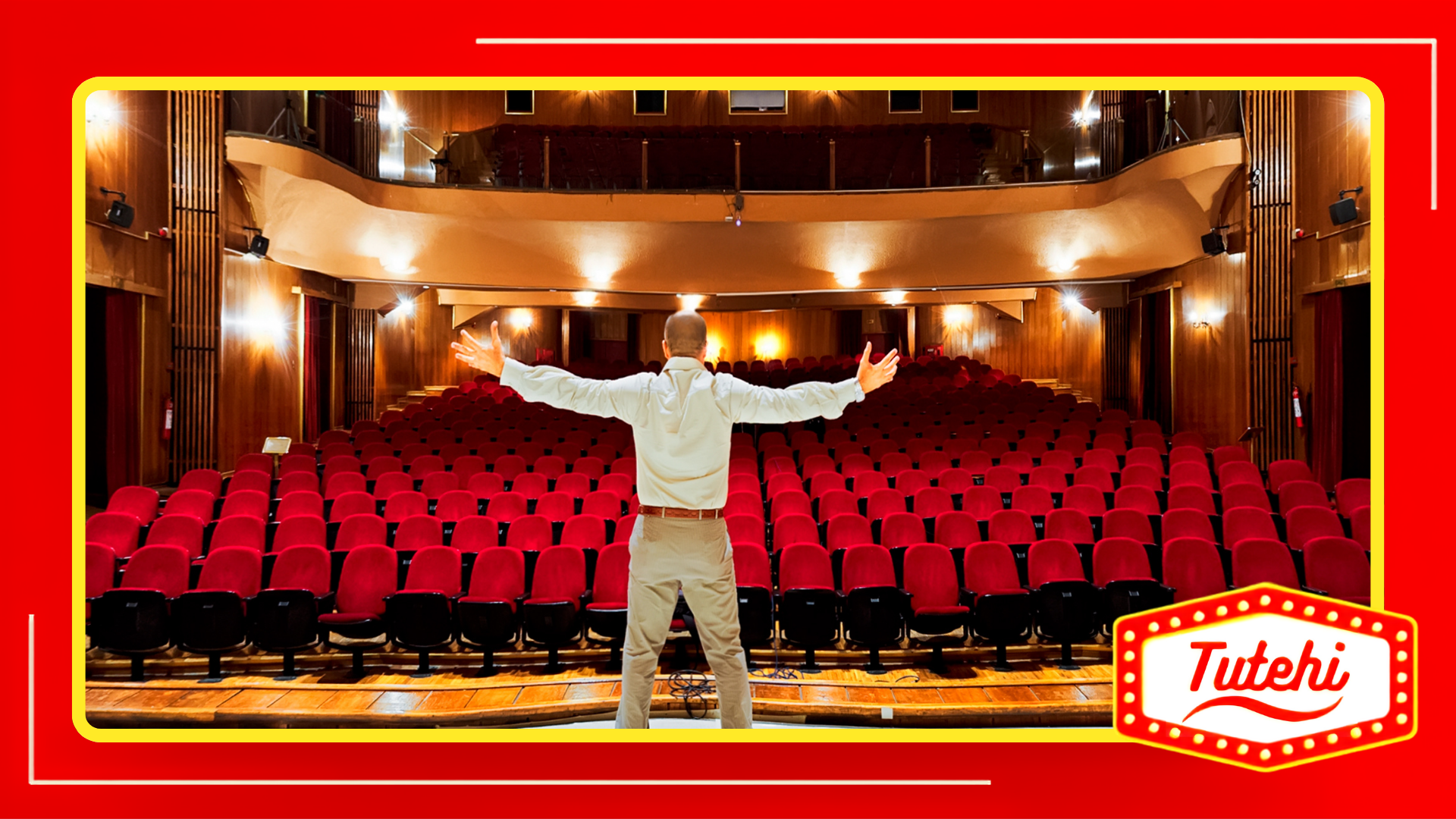
The institution's daily practical activities take place in rooms equipped for physical and vocal development, allowing students to experience the textures of the stage space from their first semesters.
Laboratory theaters serve as the perfect setting for confronting a real audience, where acoustics and lighting are operated in a way that is integrated with the actors' technical learning.
This comprehensive approach ensures that the trained professional understands the workings behind the scenes, valuing each component of the performance and avoiding individualistic views of theatrical practice.
Maintaining these structures requires continuous public investment, which is strongly defended by the academic community as an intangible cultural heritage of São Paulo.
Spending hours in these warehouses shapes the artist's spatial perception, enabling them to perform in arenas, proscenium stages, or alternative spaces with equal skill.
How does the institution address the demands of diversity in the contemporary context?
The turn of the century imposed the need to revitalize classic European texts and open the doors to Black, Indigenous, marginalized, and gender-focused dramaturgy.
Internal collectives began to challenge traditional curricula, transforming productions into living manifestos that faithfully reflect the complex social fractures of the Brazilian territory.
These artistic investigations force students to rethink the place of speech, representation, and the political body in narratives that gain visibility in the professional circuit.
In this way, the school stages cease to be mere showcases of technical reproduction and begin to operate as laboratories for aesthetic decolonization and the active reconstruction of the national imagination.
The diversity of the student body enriches classroom discussions, bringing diverse experiences that break down historically entrenched stereotypes in the dramatic arts.
The result is a much more vibrant cultural scene, where new voices find technical support to express their urgent concerns with clarity and beauty.
What career paths do graduates find in today's creative industry?
The audiovisual market and the streaming ecosystem continuously absorb the highly qualified workforce generated in the university environment, valuing the actors' quick improvisation skills and strong stage presence.
Meanwhile, the strong tradition of group theatre in São Paulo feeds back into these professionals, who frequently found new independent companies focused on ongoing research.
The versatility acquired in the classroom allows alumni to move naturally between big-budget productions with massive reach and experimental cultural guerrilla projects.
This multifaceted approach attests to the effectiveness of a training program that has never separated the excellence of artisanal craftsmanship from the critical awareness demanded by the dynamics of the modern art market.
Many also venture into the field of art education, taking the methodologies developed at the university to social projects in communities and public schools.
++ Brazilian classic cinema: what to watch
The Technical Horizon and the Future of the Arts
Understanding the trajectory of this training center is to understand the very evolution of Brazil's theatrical identity, which has become much more professional, courageous, refined, and connected to our reality.
The new times have brought urgent debates about diversity and inclusion, forcing curricula to open up to new narratives, peripheral aesthetics, and ancestral knowledge.
This constant institutional self-criticism preserves the pedagogical freshness of the school, preventing it from becoming a rigid museum of outdated techniques from the last century.
The current challenge lies in balancing technical tradition with new digital media, preparing actors to work with screens and artificial intelligence.
The persistence of excellent public education in the arts ensures that future generations of artists will continue to question the world and thrill audiences with absolute rigor and passion.
To expand your research on the history of education and artistic expression in Brazil, consult the detailed entries in... Itaú Cultural Encyclopedia and deepen your knowledge of chronology.
FAQ – Frequently Asked Questions
What is the difference between an online course and a degree in Performing Arts at USP?
The Distance Learning course is a vocational-level technical training program focused strictly on the actor's practice, while the Department of Performing Arts offers academic bachelor's and teaching degrees.
Who can apply for the school's selection process?
Anyone who has completed high school and is seeking in-depth practical training can participate in the rigorous selection exam, which usually has both practical and theoretical components.
Is the course offered by the institution free?
Yes, because it is fully affiliated with the University of São Paulo, the technical course offered is completely free, maintaining its historical commitment to high-quality public education.
How long does the technical course for training actors last?
The regular course lasts four years with daily classes in the evening, requiring full-time dedication to the grueling weekend rehearsals.
Does EAD USP offer extension courses open to the external community?
Yes, the institution periodically offers short workshops and free seminars coordinated by students and professors, aiming to bring the community closer to the academic theater ecosystem.