
São Paulo theater in the 1960s and its dramaturgical transformation.
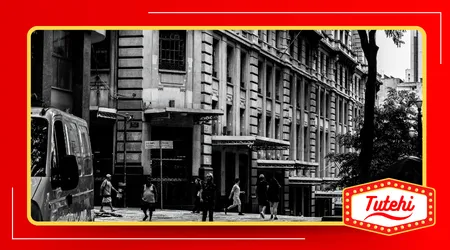
The study of São Paulo theater in the 1960s And the dramaturgical transformation reveals how cultural effervescence shaped the national artistic identity during times of profound political crisis.
Advertisement
There is something almost miraculous about the way the stages of São Paulo, surrounded by state brutality, have transformed into trenches of aesthetic resistance and intellectual provocation.
Below, you can find an analysis of the mechanisms that drove this decade — from companies that broke with convention to works that still haunt, in a good way, contemporary production.
Summary
- The Historical Context and Censorship
- The Legacy of Paulista Theater of the 1960s
- Main Companies and Collectives
- The Revolution of National Dramaturgy
- FAQ and Practical Conclusions
The Historical Context and Censorship
The 1964 military coup stifled public freedom, but, ironically, forced the São Paulo theater in the 1960s to abandon technical comfort in order to invent new forms of artistic survival.
Designers from São Paulo realized, groping in the dark, that the classic model imported from Europe was no longer able to translate the lump in the throat caused by inflation and arbitrary rule.
Advertisement
When AI-5 fell like a guillotine in December 1968, official oversight became extremely strict.
Instead of silence, however, what was seen was the flourishing of sophisticated metaphors and visceral allegories that challenged the censors to decipher the subtext of what was being said on stage.
The Architecture of Scenic Space as a Political Act
The transformation of São Paulo theater in the 1960s It wasn't limited to the written text; it imploded the very physical geography of conventional theaters.
By dismantling the traditional Italian stage—which isolated actors behind a distant frame—directors brought the viewer closer to the sweat, screams, and danger of live acting.
This new geometric arrangement, where the audience surrounded the action, forced the public to abandon the posture of passive consumer and assume an uncomfortable complicity with the political dilemmas being staged.
Censorship Behind the Scenes and Survival Strategies
Behind the scenes of São Paulo theater in the 1960sArtistic creativity had to transform itself into a kind of chess game against the bureaucratic apparatus of military censorship.
The directors and producers would personally go to the censors' offices, defending the cutting of words with false theatrical justifications to save the political core of their works.
This everyday and invisible resistance generated a network of solidarity among groups in the capital, who shared lawyers, emergency funds, and even substitute actors when pretrial detentions began to spread.
+ Scenic history and legacies of the intersection between Brazilian theater and cinema.
What were the main companies during that period?
The Arena Theatre, under the intellectual leadership of Augusto Boal and Gianfrancesco Guarnieri, brought about a radical shift by popularizing musicals that delved into the depths of national history.
Meanwhile, Teatro Oficina, led by the nonconformist José Celso Martinez Corrêa, chose the path of direct confrontation, imploding the fourth wall and dragging the audience into a kind of collective and uncomfortable catharsis.
On the other side of the urban machinery, the Sesi Popular Theater fulfilled a function that is often misunderstood: that of bringing productions of high technical and intellectual voltage directly to the factory floor, proving that aesthetic debate did not belong only to the elites of Avenida Paulista.
+ Brazilian anarchist theater and art as social mobilization.
| Company | Key Leaders | Aesthetic Innovation | Emblematic Work |
| Arena Theatre | Augusto Boal, Guarnieri | Joker System, circular stage | Arena tells the story of Zumbi. |
| Workshop Theatre | Zé Celso, Renato Borghi | Anthropophagic, aggressive theater | The King of the Candle (1967) |
| SESI Theater | Osmar Rodrigues Cruz | Training of the working class | Chronicles by Nelson Rodrigues |
How did the revolution in dramatic writing occur?
Local authors grew tired of translating foreign bourgeois dilemmas and decided to look at the asphalt of São Paulo, at the contradictions of the emerging middle class, and at the agrarian conflicts that echoed in the interior.
The writing needed to capture the rhythm of the streets, incorporating urban slang and sharp cuts, influenced by the critical distance advocated by Bertolt Brecht.
THE São Paulo theater in the 1960s This ultimately solidified the figure of the playwright-actor. The text was no longer born in the isolation of an office; it was tested, worked on, and rewritten collectively during rehearsals, in the heat of improvisation and error.
What was the impact of the Joker System?
Conceived by Augusto Boal at Arena, the Joker System dismantled the actor's vanity by requiring a small cast to play multiple roles without clinging to psychological precision.
The idea was both artistic and practical; after all, lowering production costs allowed them to hit the road and take the show to the interior of São Paulo state.
The narrator's presence broke the hypnosis of the theatrical illusion, forcing the audience to process the political machinery behind the drama, instead of simply lamenting the characters' fate.
+ Scenic history and legacies of historic theater architecture in the country.
How did Tropicalismo influence the stage?
The mythical montage of The King of the Candle In 1967, by reviving the modernist text of Oswald de Andrade, he dropped a colorful and grotesque bomb on the leftist good taste of the time.
The aesthetics of excess and blatant mockery served to show that naive and well-behaved nationalism was no longer a suitable answer to political horror.
This cannibalistic blender mixed American mass culture with the trash and luxury of popular street demonstrations, exposing the wounds of a country that was modernizing from above while rotting from below.
It is possible to delve into the iconographic collection of this rupture by consulting the platform of Itaú Cultural, which preserves the images and manifestos that survived that storm.
What were the most memorable pieces of the decade?
They Don't Wear Black-TieAlthough conceived in the late 1950s, it served as the thematic beacon for the following decade by placing the working class and strikes at the center of artistic debate.
Years later, Arena tells the story of Zumbi. and Arena tells the story of Tiradentes. They transformed the historical past into an urgent mirror for the present, using music as a scenic prop.
There was also the tragic phenomenon of Roda Viva, written by Chico Buarque. The play pushed the boundaries of provocation so far that it ended up suffering physical and violent attacks from right-wing paramilitary groups, demonstrating that theater truly bothered those in power.
How did universities in São Paulo participate in this movement?
The University of São Paulo Theatre (TUSP), far from being a space for purely theoretical discussions, became a feverish laboratory where student audacity tested the limits of censorship.
Festivals and heated debates that lasted until the early hours of the morning transformed the São Paulo theater in the 1960s in a training center that went beyond dramatic technique.
All that university activity ended up fueling the television and film structures that would consolidate in the following years, proving that the São Paulo avant-garde knew how to occupy the spaces of mass communication.
What will be the legacy of this scenic transformation in 2026?
The legacy of that generation wasn't locked away in history books; it pulsates in the DNA of the group theaters that today occupy the warehouses, squares, and slums of São Paulo's outskirts.
The choice of unconventional spaces and the obsession with a documentary-style dramaturgy that engages with the heat of the moment are direct legacies of the risks taken sixty years ago.
THE São Paulo theater in the 1960s The definitive lesson it left was the certainty that the stage withers when it accepts the role of mere anesthetic pastime, only gaining life when it proposes to be the uncomfortable mirror of its own time.
For those who wish to understand how these methodologies of collective creation are taught and explored in contemporary rehearsal spaces, it is worth checking out the research notebooks of [the organization/organization]. School of Communications and Arts of USP.
Conclusion
The transformations that shook the São Paulo art scene in the 1960s represent the most courageous and original period in our artistic history.
Even under the yoke of armed repression, directors and playwrights have proven that human ingenuity gains strength precisely when attempts are made to silence it.
Looking back is not a futile exercise in nostalgia, but a vital necessity to remember that theatre carries within its essence the seed of freedom and social reinvention.
FAQ – Frequently Asked Questions
What characterized São Paulo theater in the 1960s?
The defining characteristic was the fusion between urgent political engagement and radical formal experimentation, abandoning the formulas of traditional bourgeois drama to discuss the reality of the working class and the contradictions of the country.
How did censorship affect performances at the time?
The repression wasn't limited to censoring profanity; it involved shutting down theaters and persecuting casts. This forced artists to refine their language, relying on symbols, irony, and double meanings to convey their message without being shut down by the police.
What is the difference between Arena Theatre and Workshop Theatre?
Arena sought direct dialogue with social causes through realistic commentary and economy of technical resources.
Oficina preferred the path of aesthetic shock, tropicalist anthropophagy, and ritualistic aggression against the audience's values.
What was the Joker System created during that period?
This is a performance style where no actor has complete ownership of a character during the play.
They alternate roles under the gaze of a narrator, shattering the romantic illusion to encourage rational judgment from the viewer.