
Brazilian theatre directors and new approaches

Brazilian theater directors And these new approaches represent the core of the cultural metamorphosis that defines the contemporary scene in 2026, uniquely integrating technology, politics, and ancestry.
Advertisement
The national theater scene is experiencing a curious surge of activity; here, the director has ceased to be a mere organizer of staging and has become an architect of dense sensory experiences.
What we see now is a collective effort to shape the future of the performing arts through visceral dialogues with Brazilian reality.
The importance of following this movement lies in the almost psychic ability these artists have to reflect social fractures through aesthetics.
By 2026, we will see a powerful geographic decentralization: creators from regions previously overlooked by the Southeast are now occupying global stages with an undeniable identity.
Advertisement
This phenomenon not only revitalizes the creative economy, but also repositions the country as a cutting-edge intellectual laboratory that the world has finally stopped to observe.
Navigating this landscape requires attention to detail, which defines trends, and the names that dictate the pace of current production.
There is a latent provocation in the impact of new technologies and resource management in a market that has learned to be fierce.
This guide analyzes how national staging has reconnected with audiences without losing analytical depth. Explore the crucial points of this new era below.
Table of Contents
- Who are the prominent names in 2026?
- How is technology shaping modern staging?
- What are the new political and social approaches?
- Where does Brazilian theater find its aesthetic innovation?
- Industry data: Fundraising and investment in 2026
- FAQ: Frequently Asked Questions
Who are the most prominent figures in 2026?
The current scene is a mosaic of voices that balance technical rigor with a necessary dose of experimental chaos.
Names like Rodrigo Portella, whose directions defy the gravity of conventional perception, continue to lead productions that provoke queues and intense debates.
In 2026, his research delves deeper into the "aesthetics of presence," where the actor functions as the only possible gravitational center in the face of scenographies that breathe on their own.
Beyond the established canon, new talents are emerging from peripheral territories, bringing with them aesthetics of urgency and resistance.
Artists such as Grace Passô and Camila Bauer They have been instrumental in imploding the traditional theatrical vocabulary by merging performance and cinematic language.
This movement ensures that the stage is not just a place of representation, but a space for the autopsy of our deepest social flaws.
Leading artistically today requires the ability to orchestrate talent in often interdisciplinary and chaotic environments.
You Brazilian theater directors Modern artists operate as curators of subjectivities, uniting musicians and programmers to support works that defy the obvious.
These professionals understand that the role goes beyond the written text; it's about architecting a living ecosystem where every silence contributes to a narrative that pulsates along with the viewer.
How are technology and AI transforming stage performance?
The adoption of immersive technologies has become a game-changer for professionals who refuse to deliver the same old passive entertainment.
By 2026, the use of Artificial Intelligence to generate scenarios that react to actors' voices will have gone from a technological whim to a fundamental narrative tool.
The light now possesses a kind of "nervous system," responding biometrically to the emotional climate established between stage and audience.
These innovations allow us to explore layers of reality that previously belonged only to the realm of dreams or cinema.
However, there is a latent ethical challenge: preventing technological advancements from overwhelming human vulnerability.
Technology should serve as a magnifying glass for the actor's sensitivity, not as a substitute for the tactile and in-person experience that only theatre offers.
The impact of this digitalization directly affects the architecture of spaces, which now require robust connectivity to support the "hybrid theater."
Festivals have been rewarding those who manage to transition between the physical and virtual realms without the work losing its organic essence.
This fluidity allows productions born in Manaus to reach the world in real time, democratizing creation in an unprecedented way.
What are the new aesthetic approaches that define the "National Scene"?
The aesthetics of 2026 abandoned comfortable linearity to embrace fragmentation and multisensory experience.
Many Brazilian theater directors Today they invest in "experiential theatre," transforming the spectator into a moving part within the workings of the piece.
This dissolution of the fourth wall occurs surgically, occupying urban crevices and reinterpreting historic buildings as arenas for a drama that doesn't ask permission to happen.
There's something magnetic about the way ancestral roots are being woven into an urban and edgy guise.
Creators seek in indigenous and quilombola cosmologies the basis for a dramaturgy of the body, where movement precedes the word.
This revival, far from being nostalgic, is a political tool of affirmation that results in visually dense spectacles laden with symbolism that engages with the climate and identity crisis.
The fusion between directing and experience design is what truly sets apart the success of today's major productions.
Artists now work in symbiosis with architects to design spaces that embrace the public in 360 degrees.
This holistic vision ensures that the performance cannot be reproduced through purely digital means, preserving what is most sacred in the craft: the unique encounter between two human beings.
++ How theatrical research and memory strengthen cultural legacy.
Investment and Fundraising: The Financial Landscape of Theatre in 20206
The strength of the national artistic scene depends on a financial structure that, fortunately, has reached solid levels this year.
The modernization of incentive laws has brought an agility previously stifled by bureaucracy, attracting the attention of companies seeking real social impact.
Private investment flourished upon realizing that theater is one of the last bastions of mindfulness in an economy of distraction.
The table below illustrates how capital has been allocated, showing that innovation and decentralization are not just theoretical concepts, but real budgetary priorities.
++ Theater production in Brazil and the financial aspects behind the scenes.
Growth in Fundraising through Incentive Laws (1st Quarter)
| Year | Amount Raised (in R$ Millions) | Percentage Growth | Main Focus of the Investment |
|---|---|---|---|
| 2022 | 107,98 | – | Group Maintenance |
| 2023 | 162,63 | 50,6% | Post-Pandemic Recovery |
| 2024 | 178,78 | 9,9% | Repertory Theatre |
| 2025 | 315,15 | 76,2% | Innovation and Technology |
| 2026 | 355,40 | 12,7% | Regional Decentralization |
Where does inspiration for the stage find renewal?
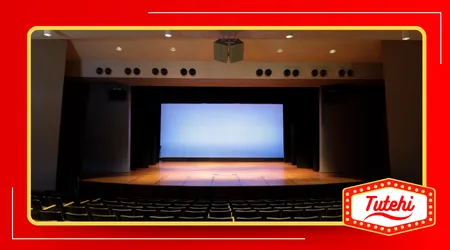
Inspiration for contemporary stage performance stems from the constant friction between what is local and what is global. Many Brazilian theater directors They have drawn from literary journalism and autofiction to construct narratives grounded in real events.
Documentary theatre has gained a rare sophistication, using historical archives to reconstruct memories that the country sometimes tries to systematically erase.
This commitment to truth does not stifle poetry; on the contrary, it provides a firm foundation for extremely powerful metaphors.
Directing theater in 2026 is a form of activism that occupies public space to debate ethics and the future of human work.
Training new generations has also become a healthy obsession for established names in the market.
Many maintain research laboratories that function as incubators for new languages, ensuring that the creative flow does not stagnate.
This cycle of constant renewal ensures that the national theater remains a vibrant force, capable of reinventing itself in the face of any crisis and maintaining its absolute relevance.
++ Alternative theater in Brazil and spaces outside the mainstream circuit.
Conclusion
The journey of the national staging in 2026 is a reminder of the indomitable resilience of our culture. By merging cutting-edge technology with a keen eye on the wounds and beauties of Brazil, the artists maintain the stage as a critical and indispensable mirror.
The maturation of the sector, supported by record investments, suggests that theater has not only survived the digital age, but has learned to tame it in order to tell even more powerful stories.
FAQ: Frequently Asked Questions
1. What is the role of the director in the digital age? He acts as a mediator of experiences, integrating technology to expand the narrative without sacrificing the essence of physical presence and the warmth of the moment.
2. How do incentive laws help Brazilian theater directors? Current laws prioritize speed in fundraising and encourage the circulation of artworks outside of major urban centers, fostering regional diversity.
3. What are the main aesthetic trends for this year? Key features include immersive 360° theater, the use of generative AI for living environments, and the revival of ancestral aesthetics applied to the urban context.
4. Where can I find the main current assemblies? Circuits like SESC, international festivals held in Brazil, and new hybrid theater platforms are the best ways to follow the production.
To stay up-to-date on calls for proposals and public policies related to the sector, please consult the portal of... Ministry of Culture of Brazil.