
Arena Theater SP and its political and cultural legacy.
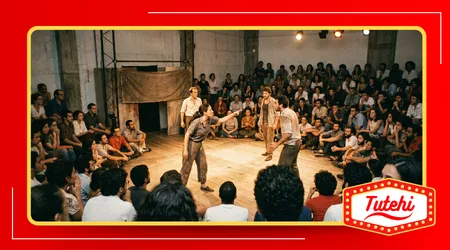
THE Arena Theater SP It operates as the exposed nerve of national dramaturgy, a space where political urgency has finally found an aesthetic form capable of translating the deep Brazil.
Advertisement
Its founding, in the early 1950s, was not just an artistic event; it was an act of insubordination against the imported and aristocratic model that dictated the rules of São Paulo's stages until then.
In this analysis, we delve into the trajectory of this collective which, by eliminating the fourth wall, forced the viewer to confront the contradictions of a country in constant social and cultural turmoil.
Summary
- The break with the European model and the architecture of contact.
- Guarnieri and Boal: the writing that gave voice to the working class.
- Survival strategies under the weight of state repression.
- The Joker System as a tool for deconstructing reality.
- Occupation and resistance: the Arena in the urban landscape of 2026.
- Table: The qualitative leap in the Brazilian scene.
- FAQ and Final Reflections.
How did the Teatro de Arena SP come about and what was its initial purpose?
The genesis of Arena Theater SPIn 1953, it carries a healthy dose of intellectual rebellion from José Renato, who saw the luxury of the TBC (Teatro Brasileiro de Comédia) as an insurmountable barrier for the people.
By adopting a circular configuration, the Arena placed the actor at the center of the conflict, without the comfort of the wings or the protection of physical distance, creating an almost ritualistic experience.
Advertisement
This choice was not merely an architectural whim; it was a brilliant economic solution for a theater that needed to be mobile, inexpensive, and, above all, visceral in its everyday communication.
What began as a quest to reduce costs quickly transformed into an ethical manifesto, prioritizing national dramaturgy and the pains of Brazilian identity in formation.
There is something unsettling in the way Arena has stripped the stage bare, proving that the essential element in dramatic art is not the sumptuous setting, but the truth present in the human encounter.
Who were the key figures who consolidated the group?
The consolidation of Arena Theater SP It necessarily involves the intellectual symbiosis between Augusto Boal and Gianfrancesco Guarnieri, figures who transformed stage theory into direct political practice.
Guarnieri gave Brazil "They Don't Wear Black Tie," a work that not only portrayed the worker but also gave him a complex subjectivity, escaping the stereotype of the poor wretch or idealized hero.
Boal, with his methodological rigor, began to outline what would become the Theatre of the Oppressed, a social technology that is still studied globally today for its capacity for mobilization.
The collective also benefited from the creative energy of Oduvaldo Vianna Filho and the sensitivity of Paulo José, artists who understood theater as a living and profoundly mutable organism.
This gathering of talent ensured that the group was not just a passing "fad," but a school of thought that withstood financial attacks and the most aggressive censorship.
What technical innovations were introduced by Arena?
The Joker System is perhaps the most ingenious legacy of Arena Theater SPallowing the cast to move between multiple roles to highlight the social structure behind the story.
This technique broke the blind emotional identification, inviting the audience to analyze the "why" of the actions, instead of simply mourning the tragic fate of an individualized and isolated character.
The performance required by that confined space was devoid of artifice; the actor needed absolute physical presence, since sweat and eye contact were perceived up close.
The music also ceased to be merely decorative and became a critical commentary, often functioning as a chorus that confronted the decisions made on stage with the suffocating external reality.
To understand the depth of this collection, the Itaú Cultural Institute It provides documents that reveal the engineering behind these assemblies that changed the course of national aesthetics.
Why is the Arena Theater in São Paulo considered a symbol of resistance?
Under the shadow of the dictatorship, the Arena Theater SP It became the lifeblood of free thought, using theatrical intelligence to circumvent the brutality of censors and repressive bodies.
Plays like "Arena conta Zumbi" used the historical past to shout against the injustices of the present, a displacement strategy that allowed them to speak the forbidden through powerful metaphors.
The resistance here was not merely thematic, but existential; keeping the doors open and the debate alive was a logistical and physical challenge for all the artists involved in the collective.
This legacy is often misinterpreted as mere activism, but it was, in fact, an uncompromising defense of the social function of art as a critical mirror and engine for transforming the world.
In 2026, looking at Arena reveals that creative freedom is a muscle that needs to be exercised, especially when power structures attempt to silence dissenting voices.
++ Scenic history and legacies of the intersection between Brazilian theater and cinema.
What is the current state of physical space and its social function?
The building that housed the Arena Theater SP Today it breathes as a center of active cultural resistance, resisting the gentrification and neglect that often erase the center of São Paulo.
Managed with a focus on memory, the venue is not a static museum, but a vibrant stage that welcomes new generations interested in investigating the relationship between politics and stage aesthetics.
Maintaining this structure is vital, as it allows the young artist to experience the power of the circle, a geometry that demands honesty and prevents any kind of base, performative hypocrisy.
Seminars and workshops on contemporary dramaturgy fill the calendar, proving that the provocations of Boal and Guarnieri continue to resonate with the anxieties and hopes of today's technological society.
The space remains a physical reminder that great revolutions don't need immense stages, but ideas that are the size of the reality they intend to radically transform.
++ Scenic history and legacies of historic theater architecture in the country.
Evolution of Performance: The Leap from the Arena
| Dimension | Traditional Model | Arena Rupture | Legacy for the Scene |
| Architecture | Rigid separation | Circular integration | Breaking the visual hierarchy |
| Theme | Bourgeois conflicts | Working-class reality | Legitimate popular protagonism |
| Performance | Formal declamation | Critical Naturalism | Direct psychological connection |
| Objective | Passive catharsis | Political provocation | Development of civic awareness |
The Arena Theater of São Paulo and the formation of national identity.

The search for a genuinely Brazilian theatrical language was what allowed... Arena Theater SP To decolonize the public gaze, presenting a mirror in which we recognize ourselves.
By placing the accent, gestures, and conflict of the people at the center of the stage, the Arena validated our historical experience, removing the inferiority complex in relation to European works.
This movement of "theatrical cannibalism" was fundamental in enabling other genres, such as popular music and cinema, to find the courage to also investigate our own wounds and beauties.
Arena taught us that the stage should be a territory for contesting narratives, where beauty is born from a commitment to truth, however uncomfortable it may seem.
Revisiting this journey in 2026 means understanding that our cultural identity was forged in the heat of these performances, where each applause was also a silent cry for freedom.
How does Arena's legacy influence theater collectives today?
The groups that now occupy the outskirts and squares owe almost everything to Arena Theater SP, which proved that it is possible to make very high-quality theater without extravagant resources.
The most enduring legacy is horizontality; the idea that theatre is made in a network, collaboratively, where creation is a collective process and not an authoritarian command.
Boal's pedagogy continues to be the basis for social projects that use the stage to resolve conflicts and strengthen the self-esteem of communities historically silenced by the system.
It is in this dialogue between the past of struggle and the present of experimentation that Brazilian theater renews itself, maintaining the essence of a stage that never remains silent in the face of oppression.
Arena's voice echoes in every production that refuses to be merely decorative, reaffirming that art is, above all, a non-negotiable commitment to human dignity.
++ Scenic history and legacies of performative practices from past decades.
Final Reflections
THE Arena Theater SP Its cycle did not end with the dissolution of the original group; it has fragmented into thousands of initiatives that believe in the transformative power of words on stage.
Her story is a testament to the fact that intelligence and affection can be powerful weapons against authoritarianism, creating spaces of freedom where there seemed to be only desert and silence.
Honoring this legacy means ensuring that the theater continues to be this dangerous, necessary, and profoundly human meeting place, capable of reinventing the future with each new performance.
To explore the funding guidelines that ensure the continuity of spaces like this, visit the website of Ministry of Culture It details the policies for preserving intangible heritage.
FAQ: Understanding the Legacy of Arena
1. What made the Arena Theater in São Paulo so revolutionary?
His courage in exchanging the glamour of imported plays for the harshness of Brazilian life, using the circular stage to eliminate the distance between the actor and the spectator.
2. How will physical space be used in 2026?
The building functions as an active cultural center in São Paulo, hosting experimental productions, training courses, and serving as a memorial to political resistance.
3. What was Augusto Boal's role in the group?
Boal was the great theoretical systematizer of Arena, developing methods of staging and interaction that evolved into the Theatre of the Oppressed, used worldwide as a pedagogical tool.
4. Is the Joker System still applied?
Yes, many contemporary collectives use this technique to avoid the cult of personality surrounding the actor and to focus on the social message and political structure of the works presented.
5. Why is “They don’t wear black tie” so important?
Because it was the first time that the Brazilian working class was portrayed with human and political depth on the main stage, forever changing the focus of elite national dramaturgy.